
A lawn is the first thing people see. Done well, it makes a home or business look cared for, gives you a place to relax, and keeps the soil healthy. Ruben’s provides lawn care for homes, rentals and commercial properties in Bellingham and across Whatcom County, on a regular schedule or as a one-time job.
Why hire professional lawn care?
Anyone can run a mower, but a lawn that stays thick and green through wet winters and dry summers takes more than mowing. Here is what you get when a crew looks after it.
Spotting problems early
Soil trouble, disease, pests and nutrient shortages are easier and cheaper to fix when they are caught early.
Treatments that fit the lawn
Fertilizer, weed control and timing matched to your grass and our local climate, not a one-size-fits-all product.
Time back
No more weekends spent mowing, edging and troubleshooting.
Better results
Commercial equipment gives cleaner cuts and deeper aeration than most home equipment.
Lower long-term cost
Steady care helps you avoid costly reseeding, sod replacement or lost shrubs.
What lawn care includes
Residential lawn care
- Mowing and edging
- De-thatching
- Aeration
- Soil testing, with fertilizing based on the results
- Weed and pest control
- Seasonal care, including spring and fall clean-up
- Pruning of shrubs
Commercial lawn care
- Regular mowing and maintenance
- Adding flowers and shrubs
- Irrigation installation and maintenance
- Soil liming and conditioning
- Ongoing monitoring and treatment for weeds and pests
How can I make my lawn look better?
The right fix depends on what is wrong. These are the options we use most.
Hydroseeding
A mix of grass seed and mulch is sprayed over the area. It is a cost-effective, eco-friendly way to start or thicken a lawn, and it helps hold soil in place against erosion.
Soil liming
Western Washington soil tends to be acidic. Liming adds minerals and raises the pH so grass can take up nutrients.
Aeration and de-thatching
Opens up compacted soil and clears the layer of dead material that blocks water and air.
Fertilizing and weed control
A balanced feeding schedule plus weed and pest control keeps the lawn thick enough to crowd out weeds.
Should I seed or sod?
Both work. The choice comes down to budget, sun and how quickly you want results.
Seed
Lower upfront cost, more grass types to choose from, and a good fit for shady areas. It takes longer to fill in.
Sod
Higher installation cost but an instant lawn, with less ongoing fuss. Best where there is plenty of direct sun.
Either way, we can keep it healthy afterward with patch repair, mowing and edging, a feeding and watering schedule, and aeration and de-thatching.
How often does a lawn need care?
In the growing season most lawns need mowing about every week to ten days, depending on the grass. Letting grass and leaves pile up creates thatch, a mat of dead material that blocks water and weakens the lawn. We offer mowing, raking, de-thatching and aeration, on a schedule that suits your property.
- Spring: clean-up, feeding, weed control and aeration
- Summer: regular mowing, watering and weed control
- Fall: leaf clean-up, aeration, overseeding and liming
- Winter: tidy-up and drainage checks
Recent lawn care
Tap a photo to see it larger.
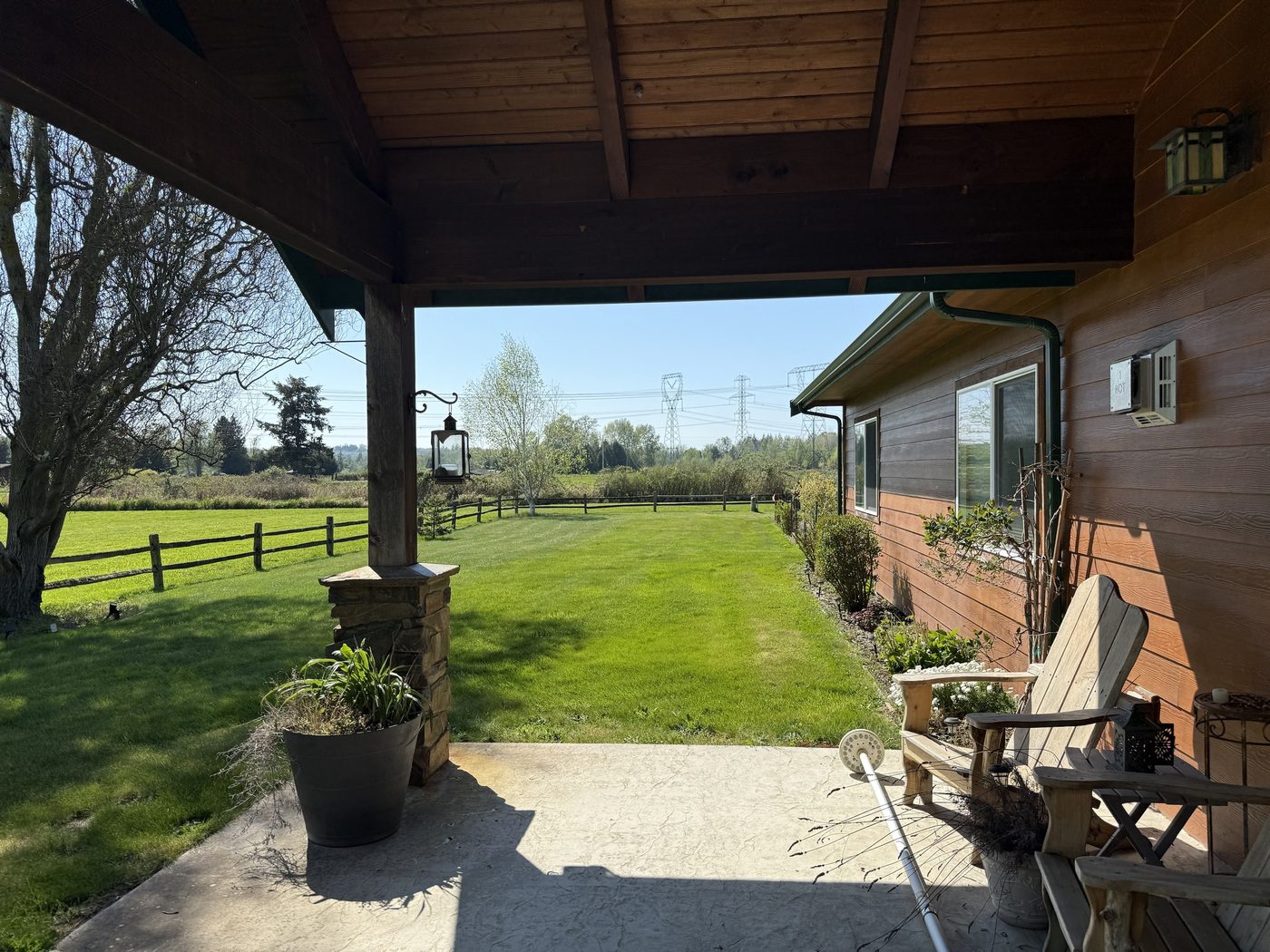 Healthy lawn by a covered patio
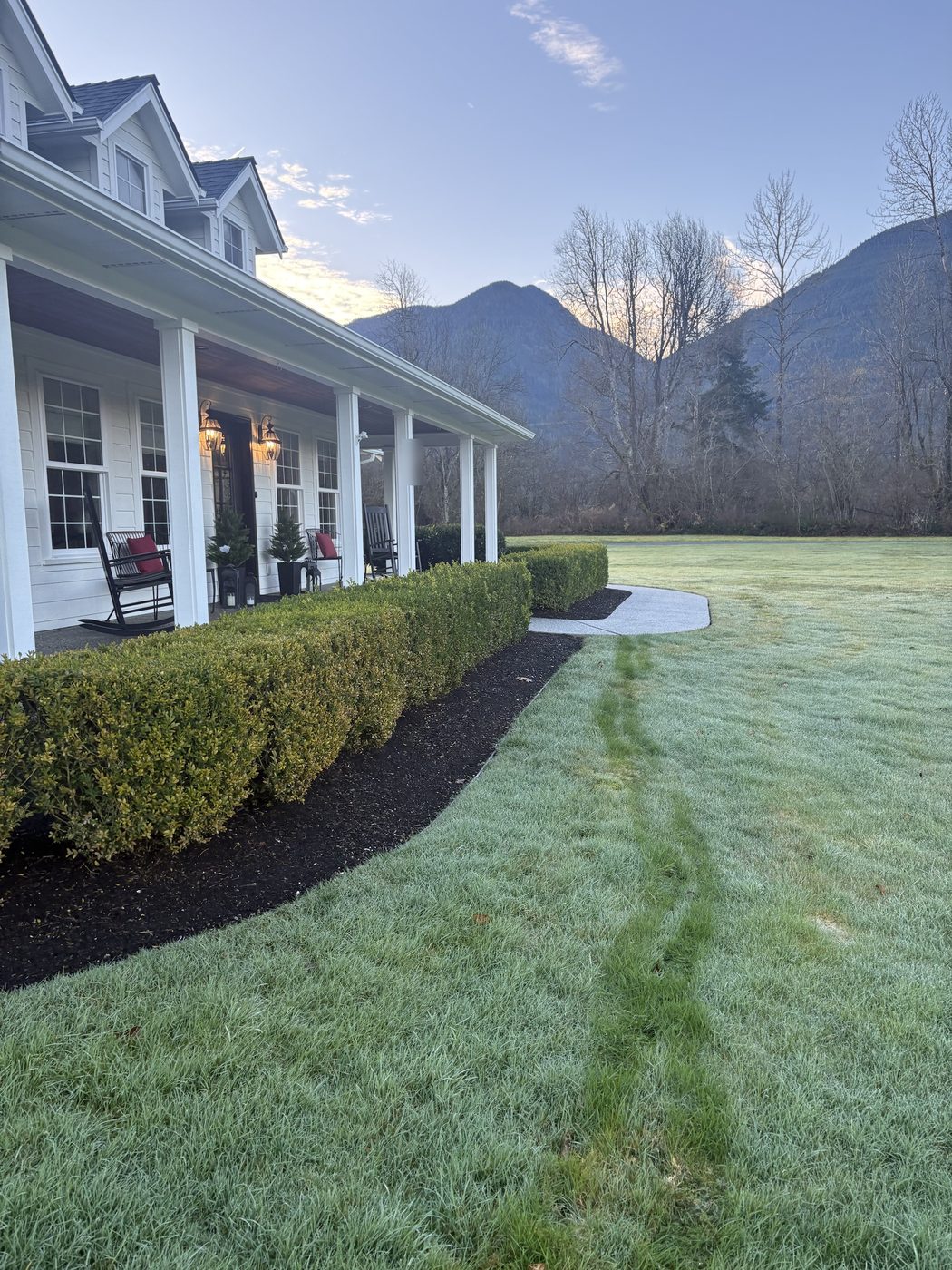 Trimmed hedges and fresh mulch
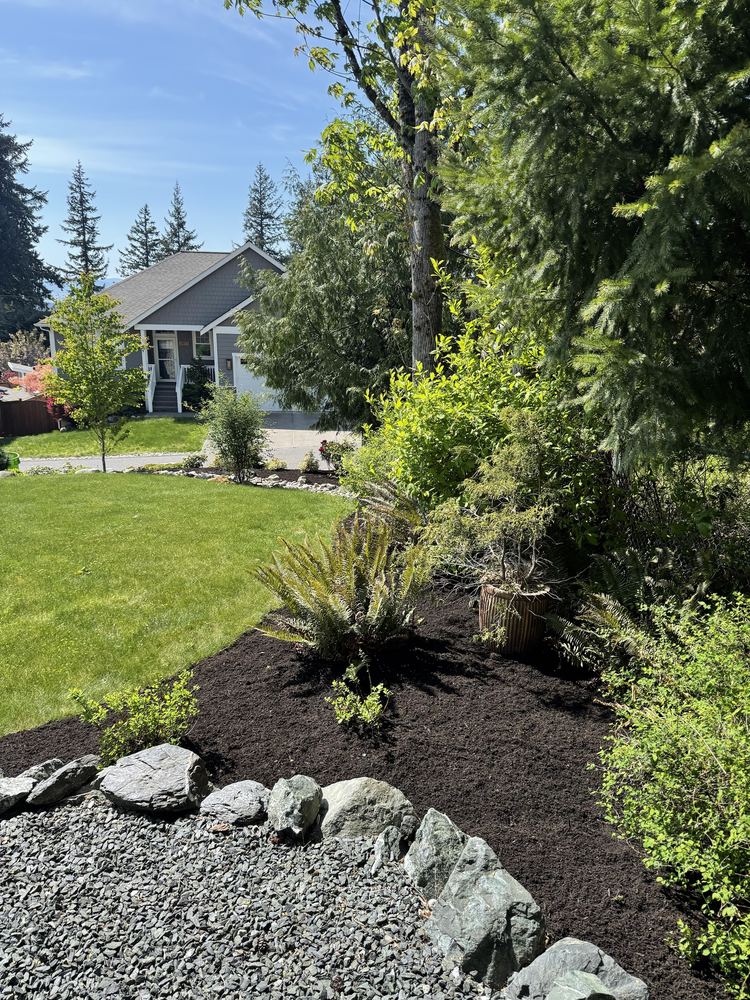 Mulch and rock edging
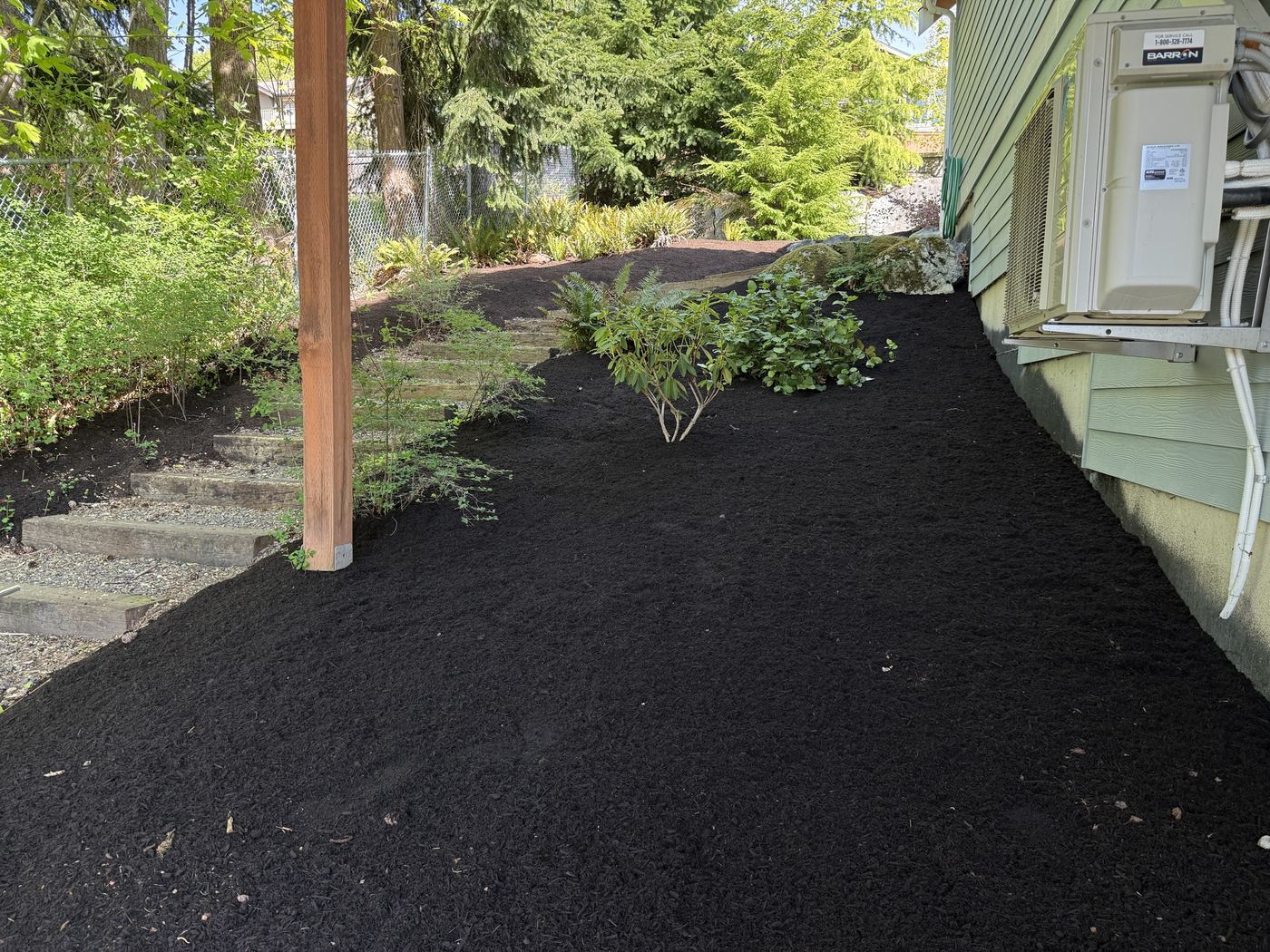 Mulched slope with steps
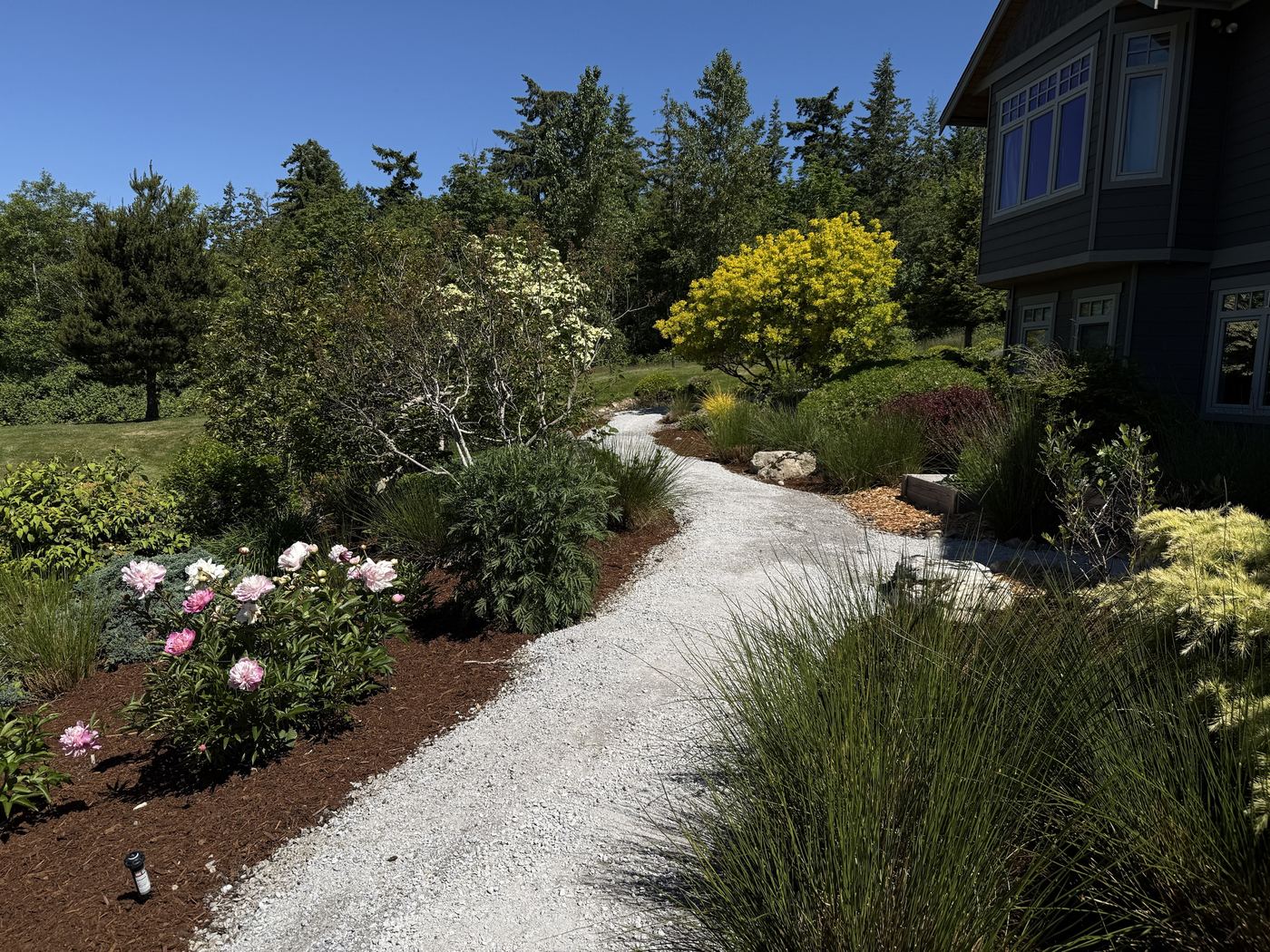 Gravel path and garden beds
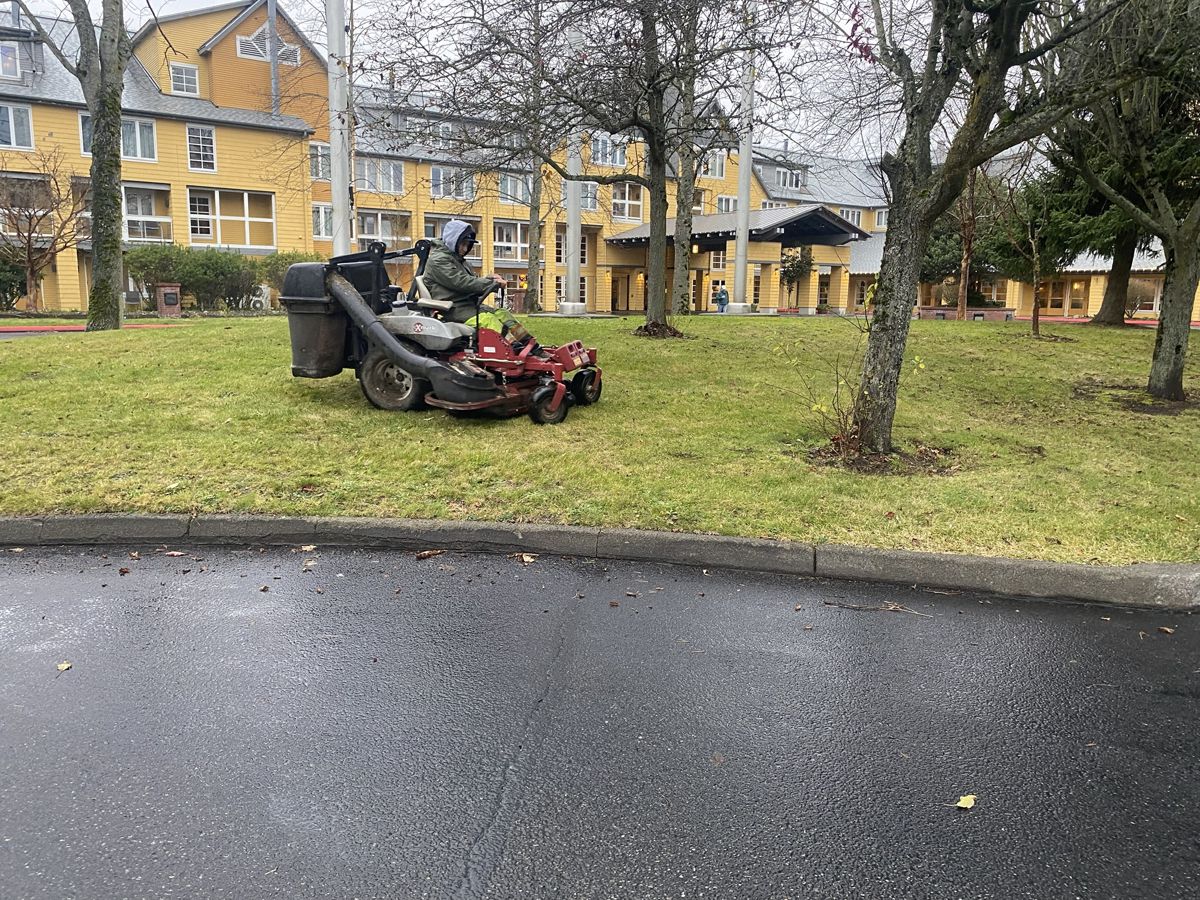 Mowing and bagging
Why choose Ruben’s?
Ruben’s is family-owned and has been working in Whatcom County since 2009. We take care of homes, rentals and commercial properties, and one crew can handle your lawn, your pavement and your snow.
Lawn Care FAQs
How much water does my lawn need?
As a rule, about an inch to an inch and a half a week, from rain or irrigation, depending on your soil and weather. Water deeply and less often rather than a little every day.
How do I keep weeds out?
Mow at the right height, aerate regularly and keep the lawn thick. Pre-emergent treatments and regular weeding help, and we can do weed maintenance weekly or every other week.
What fertilizer should I use?
A balanced fertilizer applied on a schedule suited to your grass type. A soil test tells us exactly what your soil needs.
When is the best time to water?
Early morning, or late evening if you cannot manage that. Watering in the middle of the day wastes water.
How do I improve my soil?
Aerate regularly, add organic matter such as compost, and get a soil test so you know what is missing.
How do you deal with lawn pests?
By starting with healthy grass and resistant varieties, using beneficial insects where it makes sense, and treating only what is needed.
What should I do for my lawn in winter?
Mow a little shorter before the cold, clear debris, apply a winter fertilizer if it is needed, and make sure water can drain away.